Chili crisp oil
A pantry staple: peanut chili oil to set your taste buds on fire
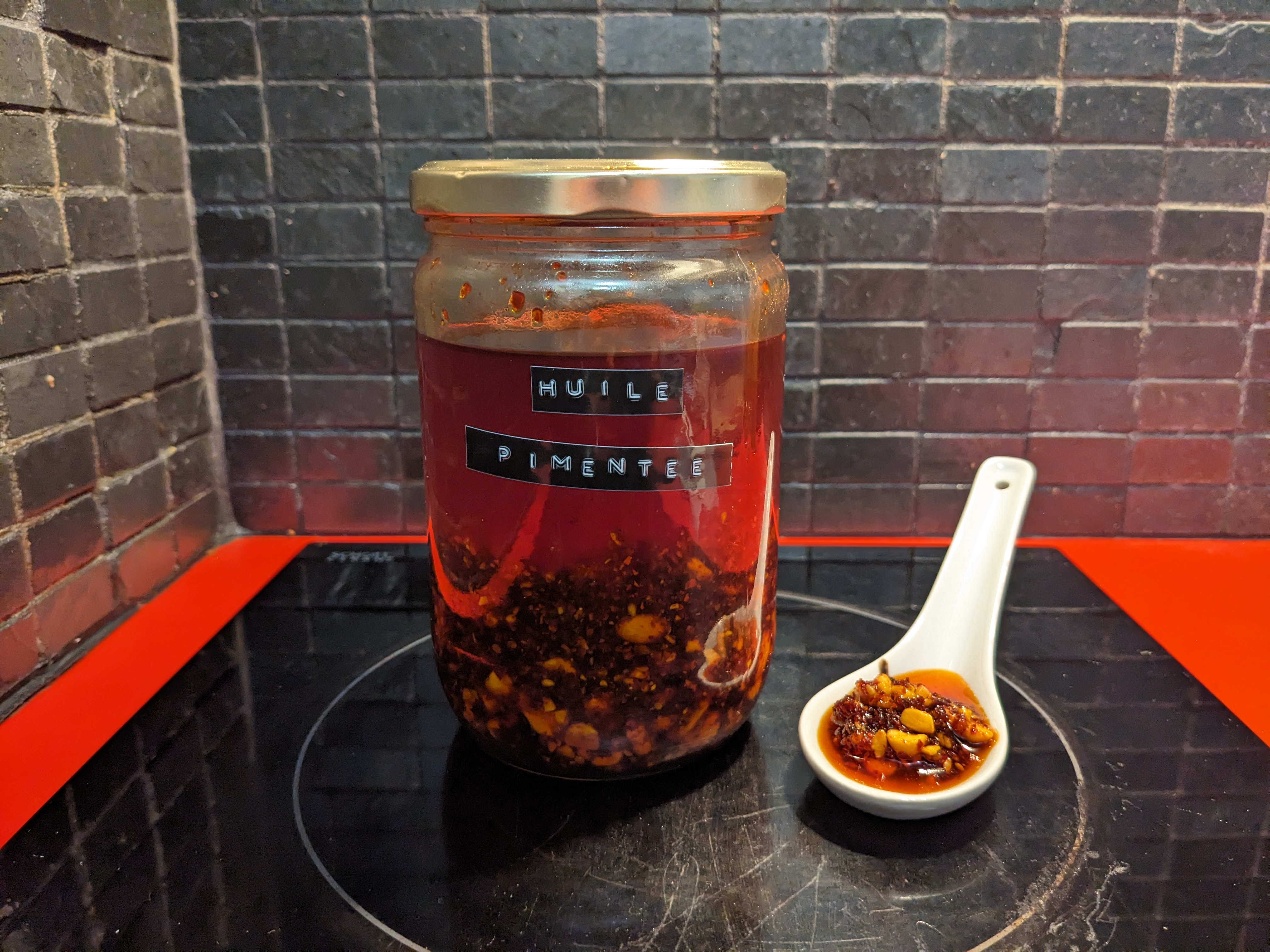
A recipe inspired by the Sichuan region
In Sichuan cuisine, chili oil is a central preparation used in countless dishes. They do not use just one, but rather a wide range of different oils: Hóngyóu (红油), Málà hóngyóu (麻辣红油), Lǎoyóu (老油), Pàojiāo yóu (泡椒油), and so on. Also, forget the image of chili oil whose sole purpose is to burn your palate, because it mainly brings a lovely aromatic range and plenty of flavor. Here, I am not offering one of these recipes directly, but rather something in between. Something between a Sichuan chili oil & a chili crisp oil. We will draw inspiration from these different preparation methods to understand how to get the most out of our spices and achieve the desired balance.
When choosing chilies, we are looking for three functions: heat, aroma / fragrance, and color. For each of these goals, we can use a different chili for the quality we want. Here, Gochugaru (Korean chili flakes) provides both color and aroma; it is only mildly spicy, but gives the oil a beautiful scarlet-red color, which is why we use so much of it. Cayenne, on the other hand, brings significant heat, so use a slightly lighter hand and adjust the quantity according to your guests’ tolerance.
The choice of oil is also important. There are two possibilities. Either use a neutral oil that is easy to find in supermarkets (grapeseed, rapeseed, or sunflower oil), or a more aromatic and traditional oil, which is also more difficult to find. Namely caiziyou (菜籽油), a toasted rapeseed oil. This one is very common in Sichuan cuisine, with a powerful, toasted, slightly vegetal flavor and a mustard aroma when heated (unlike neutral oils, which are more odorless).
Finally, regarding the techniques used in this recipe, we can focus on two aspects.
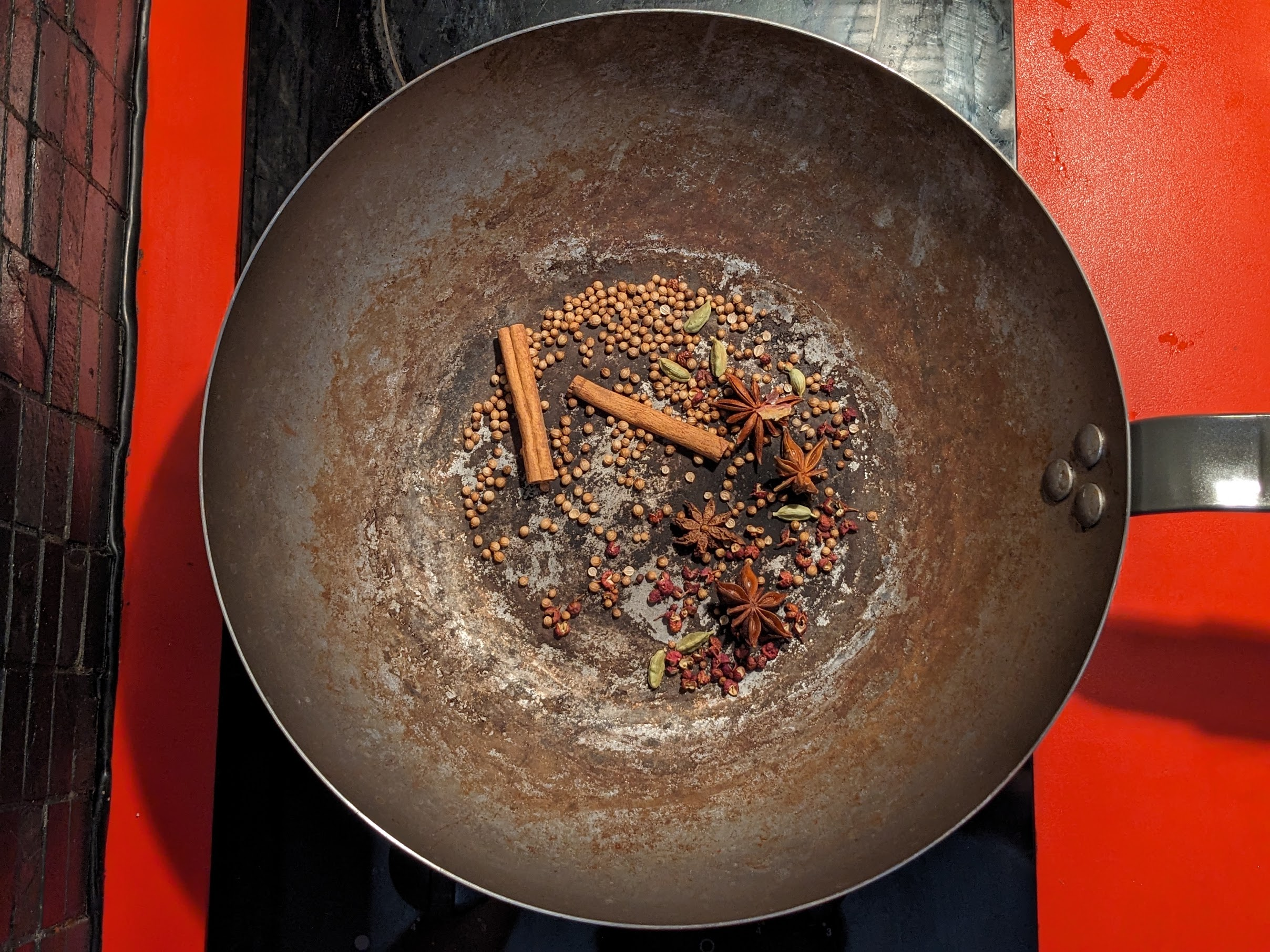
The first is dry-toasting our spices, which transforms and develops their aromas through the action of heat.
As soon as you start to smell the spices, stir them and do not take the toasting too far, as you risk burning them and developing an unpleasant bitterness.
Not all spices benefit from toasting, so check first and never toast a ground spice (rather than a whole seed), as it would burn immediately.
The second technique is infusing the spices in the oil.
Many aromatic compounds found in spices are fat-soluble, meaning that they dissolve in fats. Without fat, spices do not reveal their full aromatic potential.
Cold extraction works, but takes a long time; by gently heating our oil with the spices, we promote and speed up the extraction of these aromatic molecules.
Like any other fat, oil is a true carrier of flavor, so do not hesitate to add your spices at the beginning of cooking in a fat for your other recipes (a curry, for example).
When serving the chili oil in your cooking (for example, with Dandan Noodles) or at the table, you can either scoop out only the oil from the top of the jar or scoop out the solids from the bottom, which are absolutely delicious and very fragrant.
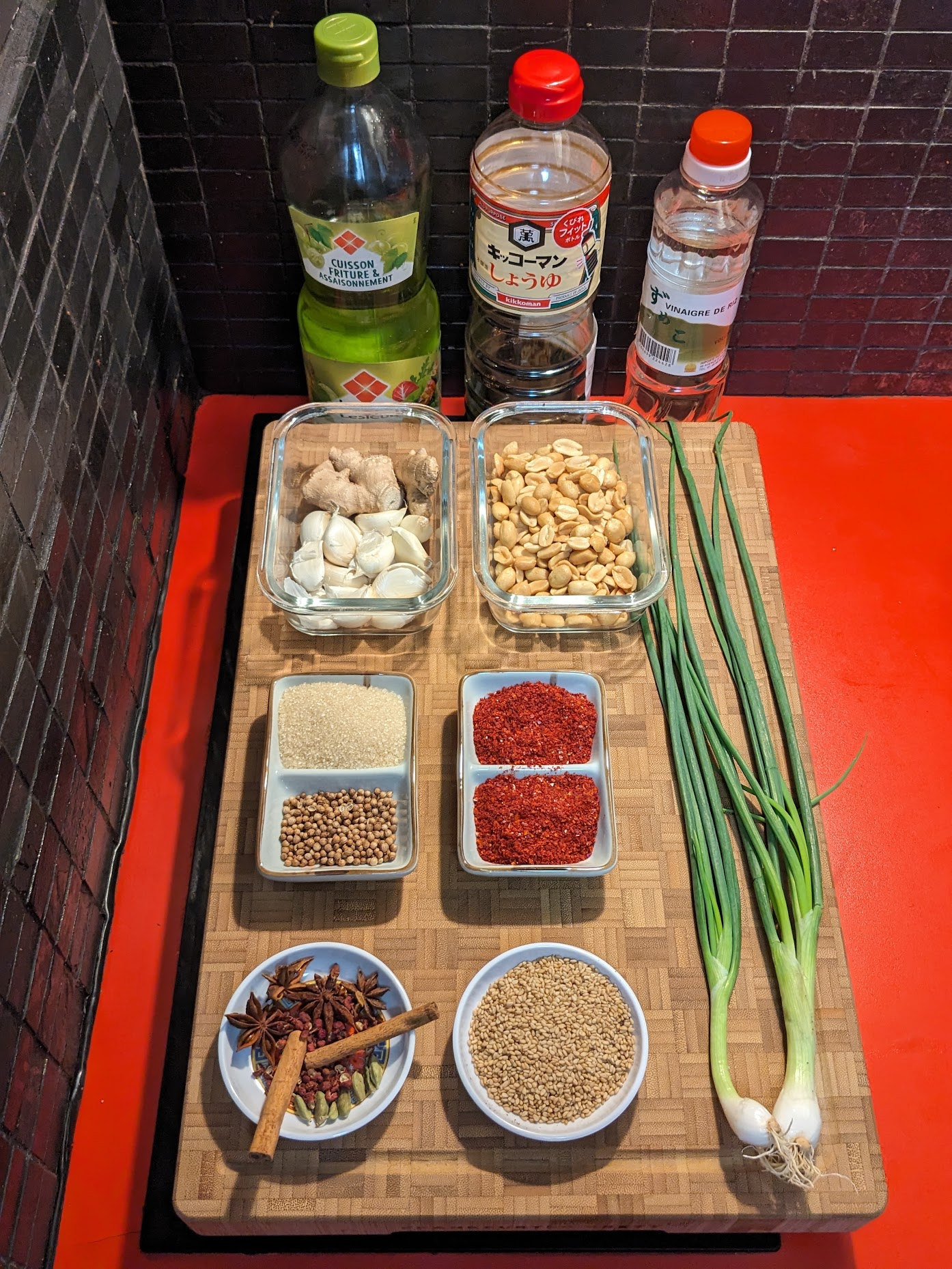
Ingredients
- 100 g peanuts
- 10 garlic cloves
- 4 tbsp sesame seeds
- 250 ml rapeseed oil / caiziyou
- 1 tbsp black rice vinegar
- 1 tbsp soy sauce
- 1 tsp salt
- 2 tbsp sugar
- 4 tbsp gochugaru (Korean chili flakes)
- 2 tsp Cayenne pepper
- 2 sticks cinnamon
- 1 tbsp coriander seeds
- 3 star anise
- 5 pods cardamom
- 1 tsp black pepper
- 1 tsp Sichuan pepper
- 2 scallions
- 1 piece ginger
Steps
- 1
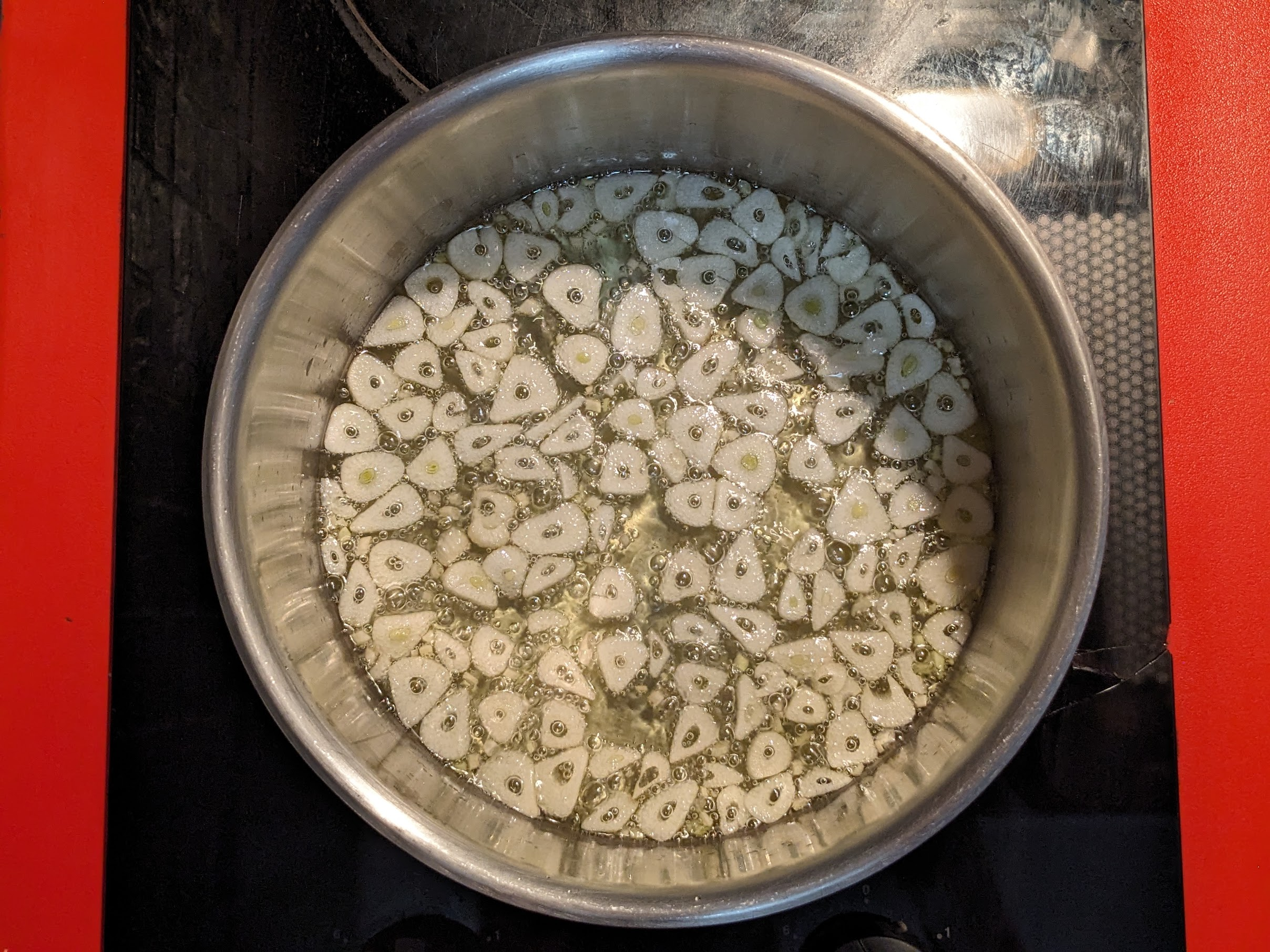
Thinly slice the garlic, fry it for 4 to 5 min in the neutral oil (around 150 °C) until the slices are lightly browned, then set the garlic aside.
- 2
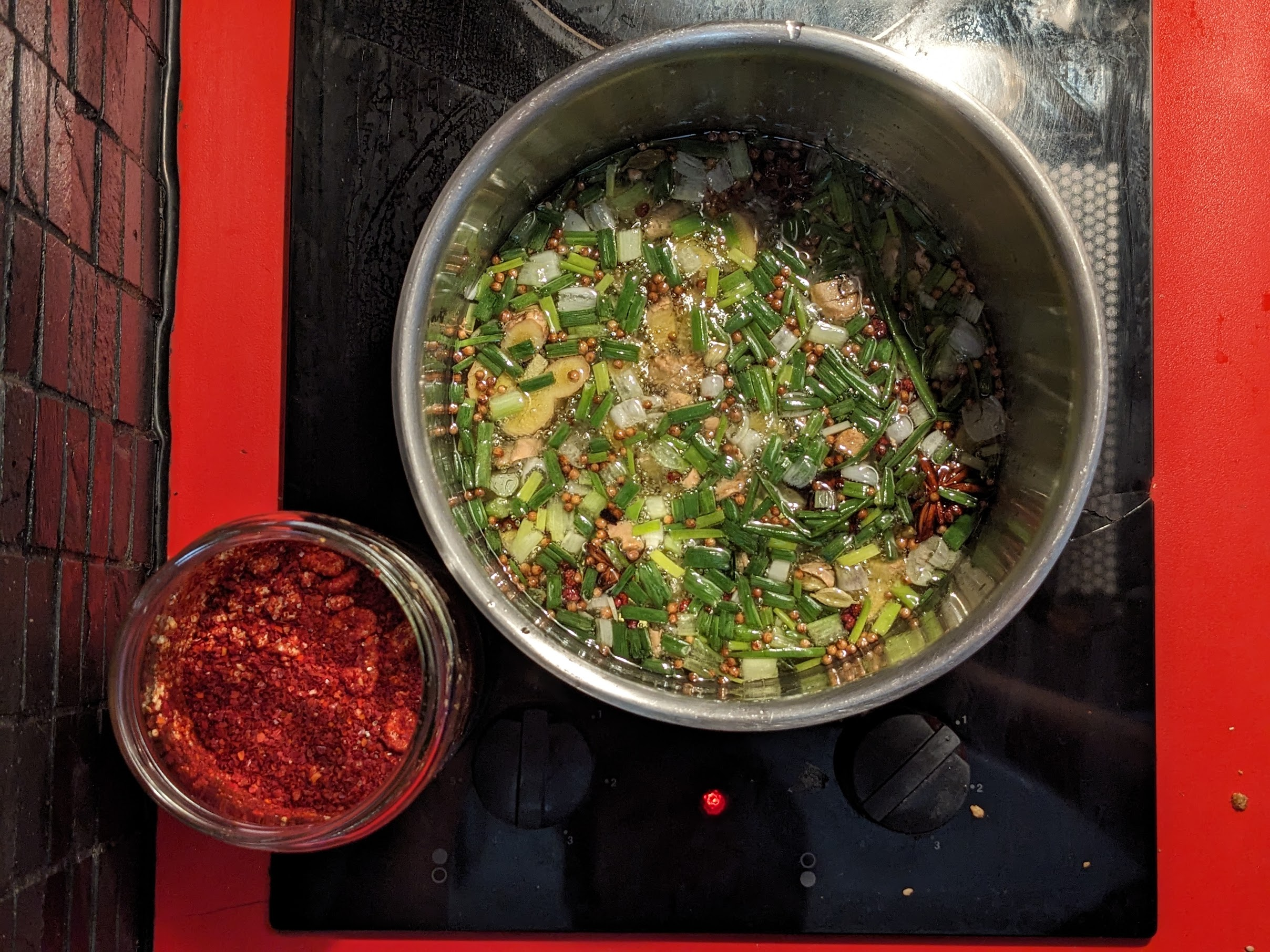
Dry-toast the spices that will be used to infuse the oil (cardamom, cinnamon, black pepper, star anise, coriander seeds) for 30 to 40 s, then roughly slice the ginger (without peeling it) and the scallions.
- 3
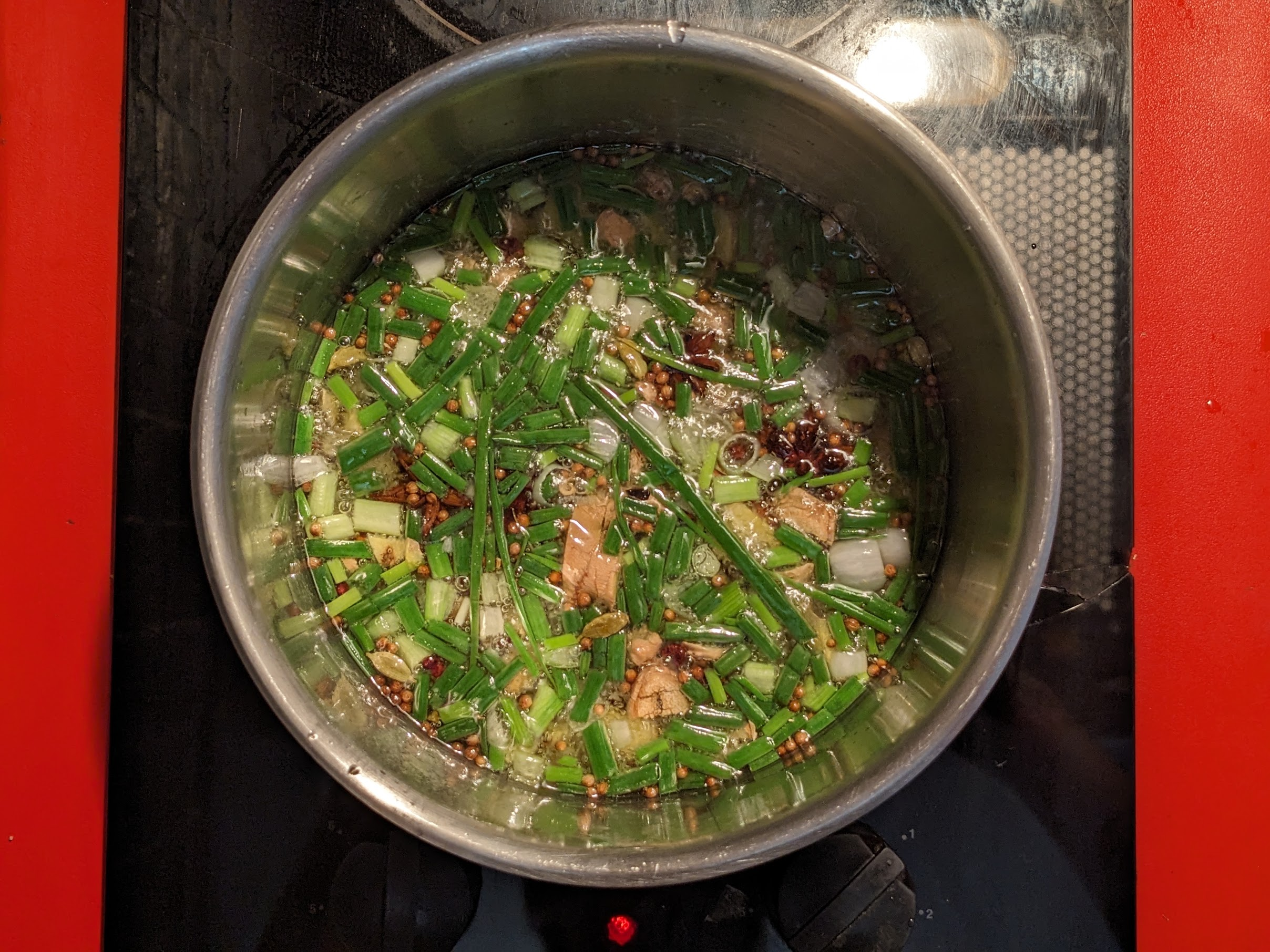
Add these spices from the previous step, the ginger, and the scallions to the oil over low to medium heat (110–120 °C) for 30 to 60 min. A very gentle simmer should occur; if it simmers more strongly, lower the heat or, if you are already at the lowest setting, remove it from the heat for a few moments.
- 4
Meanwhile, dry-toast the Sichuan pepper for 30 to 40 s, stirring constantly in your hot pan (over medium heat, until its aroma starts to develop), then set it aside. Do the same with the sesame seeds (1 to 2 min), then the peanuts (2 to 3 min, for a light color and a nice toasted aroma; if they are already toasted commercially, skip this step). Then roughly crush the peanuts, sesame seeds, and previously fried garlic, and finely grind the Sichuan pepper, then set it aside.
- 5
Strain your oil through a spider strainer or fine-mesh strainer, then bring it up to around 155 °C.
- 6
Fill your jar* with the gochugaru and Cayenne pepper, then pour in the very hot oil. Then mix the oil and the chilies, and add the salt, sugar, peanuts, garlic, sesame seeds, Sichuan pepper, vinegar, and finally the soy sauce.
- 7
Ideally, let rest for one to two days in the refrigerator so that the chili oil can develop its flavors.
Inspiration & sources
If you have some time and are not afraid of falling down a rabbit hole, go check out the articles by Chinese Cooking Demystified, which are true encyclopedias. Otherwise, here are a few articles and videos that helped me develop this recipe:
- Sichuan Chili Oil: the Complete Guide - Chinese Cooking Demystified - Video
- Huile pimentée ail croustillant et cacahuète 🥜 🔥 🌶️ - Whoogy’s - Video
- How to Make Chili Oil - The Woks of Life - Article
- Sichuan Food, like the Restaurants - Chinese Cooking Demystified - Article